Upward trend
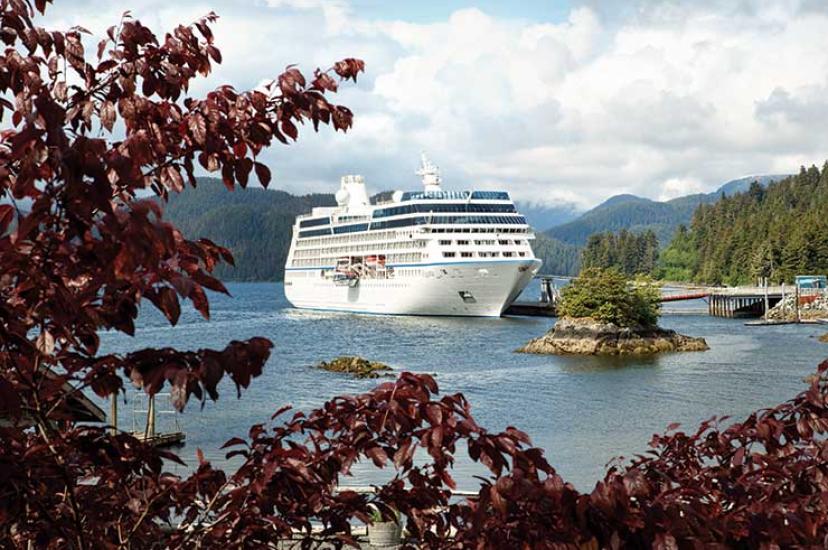
Meanwhile Clive Jones, Oceania Cruises and Regent Seven Seas Cruises senior director, guest services, paints a similar picture beyond the coastline. He says in 2016 Oceania launched the 684-guest Sirena while Regent launched the 750-guest Seven Seas Explorer with its sister ship due to take to the waves in 2020.
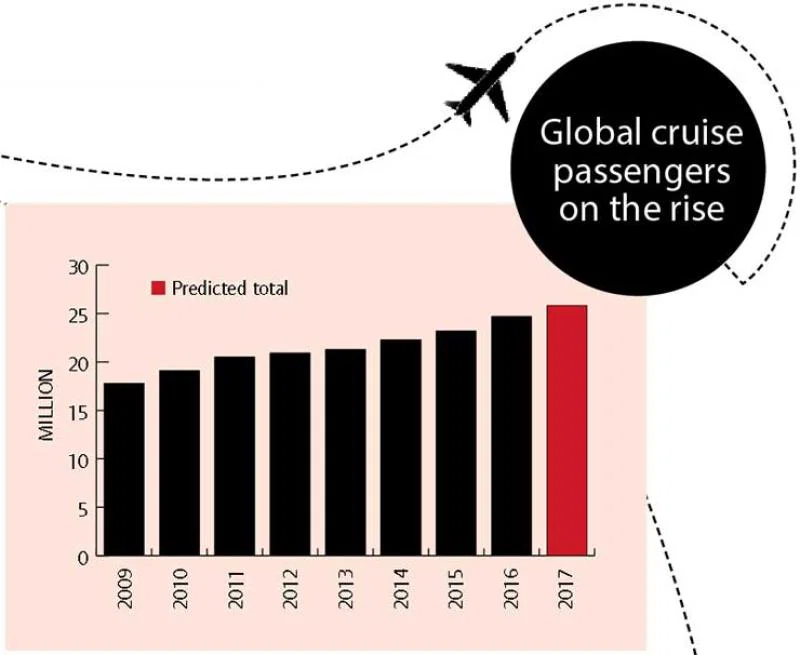
He adds: “Cruise is a global, multi-billion-dollar industry which grows in popularity as a holiday choice each year. Cruise lines are building more ships to satisfy demand, which of course results in the need for more itineraries and therefore more flights.”
Like the aviation industry, while much of the growth is on well-established itineraries as capacity increases, customers’ thirst for new adventures is also helping to drive growth. Winterton says that while the 1,161km-long Rhine the Main and Danube, which are connected via canals, are the most popular rivers for cruising, others are beginning to come into play.
“The Rhine remains the most popular river – it is what people expect of Europe,” he says. “But the Douro in Portugal is becoming popular, as is the Rhone in France.
In addition, because many of the turnaround ports, where customers embark and disembark at the start and the end of their trips, on these rivers are not close to traditionally popular airports, there is an opportunity for many secondary airports to grow their numbers.
“One of the main differences for the airlines is having the routes to where we want to go with the right availability,” Winterton says. “We’re not going into traditional holiday destination airports like Palma; we’re going into Nuremburg, Vienna or Frankfurt.
“Many of them don’t have a great direct flight from UK regional airports and our guests often have to fly via Amsterdam, so our biggest airline is KLM. Where we can get direct flights on Jet2.com or Flybe, we are doing so and our guests are using them.
“However, our Douro itinerary is a Saturday-to-Saturday cruise and Jet2.com and Flybe don’t do weekends, so our customers have to come back via Amsterdam. Our river cruises tend to go every day and with a lot of regional airlines doing mainly Friday services or the weekends. It means we can struggle.”
Jones adds that the restrictions of the ocean cruise sector means airports based close to the coastline are the ones most likely to benefit from increased cruise passenger numbers. However, he believes inland airports can still find they have a role to play too.
He says: “In general, coastal airports are the vast majority of those used but there are some exceptions. We use Calgary International Airport as a start and end point for some of our Alaskan cruises, where we have a land tour as part of the holiday package.
“Bangkok is inaccessible to larger cruise ships and so often not perceived as a cruise destination by airlines. However, south-east Asia is becoming more popular and Bangkok is an excellent gateway to the destination.”
Just like the river sector, Jones also admits that some of the airports used for turnaround traffic are easier to access than others.
He says: “Many flight routes to the key cruise destinations like the Mediterranean and Caribbean are well established and fit for purpose. However, there are some routes to off-the-beaten-path destinations which could be looked at.
“Anchorage is a difficult route back to Europe as it is not always possible to catch a connecting flight on the same day. We often have to put guests in a hotel overnight, which is an added inconvenience to the guest and an added cost to either the cruise line or guest.”
Joining forces
Jones adds that airlines and airports do need to learn how to work with cruise companies, which often find their scheduled sailings are subject to the tides, so giving little leeway for delays.
“Ships must sail on schedule, so the absolute number one priority for cruise lines is for flights to get guests to the destination on time,” he says.
“There are inevitably going to be delays and cancellations that can make punctuality more difficult. However, when these events do take place it is absolutely critical that there are clear plans in place and open communication between airlines and cruise lines to ensure that the customer is taken care of. It’s in both our interests.”
Jones says things can be further complicated as turnaround days can be different with every sailing, adding more complications. He adds that airlines need to be honest and open with the cruise operators in the event of industrial action in order to put alternative plans in place. If they don’t, the reputation of both companies can suffer.
Winterton agrees that airlines need to be flexible to work with cruise operators, but also makes a plea for both airlines and especially airports to do all they can to help cruise customers, who are typically older than 55 and require more help.
He says: “One of the biggest complaints from the guests is over the transfer situation. They tend to need a little more assistance as they’re not used to flying and their legs are a little older. They need a bit more time to make a connection and they need assistance and clear signage.
“If you are flying into one terminal and out of another, they can struggle on making the connection. Airports and airlines are using a connection time of one hour 15 minutes and they have to run to make it.”
However, Winterton says taking care of cruise customers is financially worthwhile for the airports as many are fairly affluent and believe the holiday starts once they have checked in – in which case they will spend money on lounges or in the shops while they await their flights.
He also believes cruise companies have an interest in working with airports and tourist boards to drive route development and cites Emerald’s own experience of working with the Nuremberg tourist board in the past to secure new routes.
“We help them by providing them with figures on our predicted cruise passenger numbers and predicted growth for the next couple of years,“ Winterton says. “We have an incredible amount of information from our database and we are keen to talk to any airline, airport or tourist board that wants those sorts of figures.”
Jones agrees, adding: “We would always be happy to offer advice in regards to route development. We know where demand is growing and where there are potential incremental revenue opportunities for the airlines, whether it is guests upgrading to business class or long-haul flights.”
So whether it is river or ocean cruise, there remain unexploited opportunities for airlines and airports to grab hold of. But they need to keep in mind just how important the relationship is with the cruise operator if they truly want to make it plain sailing.