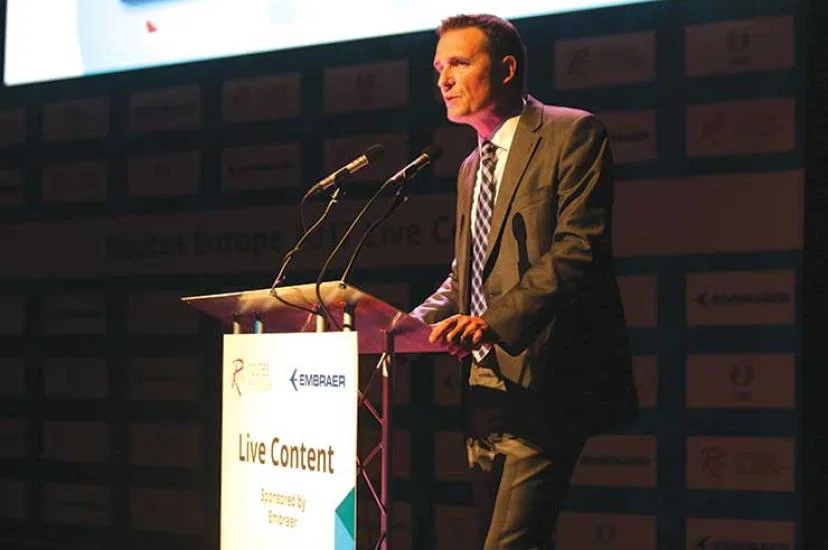
That was the message from Airlines for Europe (A4E) managing director Thomas Reynaert, speaking at Routes Europe last week. He said in the past six years in Europe there had been 117 strikes, totalling 217 strike days.
This led to 278 days of disruption as airlines coped with the initial disruption, and apparently cost EU members €12 billion in cumulative negative financial impact.
Reynaert also said that analysis showed airlines were not the worst-hit sector, as only 6% of the sum was their own lost revenues. Instead, tourism suffered most, with 59% of the €12 billion figure resulting from reduced tourism spending. He added: “That’s a real scandal. That’s what the disruption can cost. And that’s just the financial cost – it is not the social cost with families being disrupted.”
Reynaert said the country with the most ATC strikes during the six-year period had been France, with more than 25 days of industrial action – and he added that due to its geographical location, the effect of a strike could be disproportionate for Europe.
Other problems affecting European aviation include airport charges and security costs as the continent sees an increase in terrorist attacks and taxes.
Reynaert argued that many airports were still able to act as “monopolies” and were less than transparent when it comes to the charges they levy from airlines.
He added: “The way charges are being worked out in many places is simply not transparent.
“But I’m not saying the majority of airports are getting it wrong; the majority are getting it right.”
Reynaert said the problem could get worse as a result of increased terrorist attacks, many of which target airports. But he said security was a duty of the state and that governments should do more to crack down on terrorism as well as funding airport security.
Regarding aviation taxes, Reynaert said European passengers had been “fleeced” of €5.6 billion in 2016. He added that the UK was worst hit at €3.6 billion followed by Germany at €1.1 billion. He urged governments to cut the taxes to stimulate the market, raising their own revenues as a result.