The year 1997 was a vintage one for aviation-themed films, including the likes of Con Air – with Nicolas Cage, John Cusack and John Malkovich taking acting (and a toy bunny) to new highs and clearly enjoying their roles.
Meanwhile, we witnessed Harrison Ford flex not only his acting skills but also his muscles as he took on Gary Oldman in the political action-thriller Air Force One.
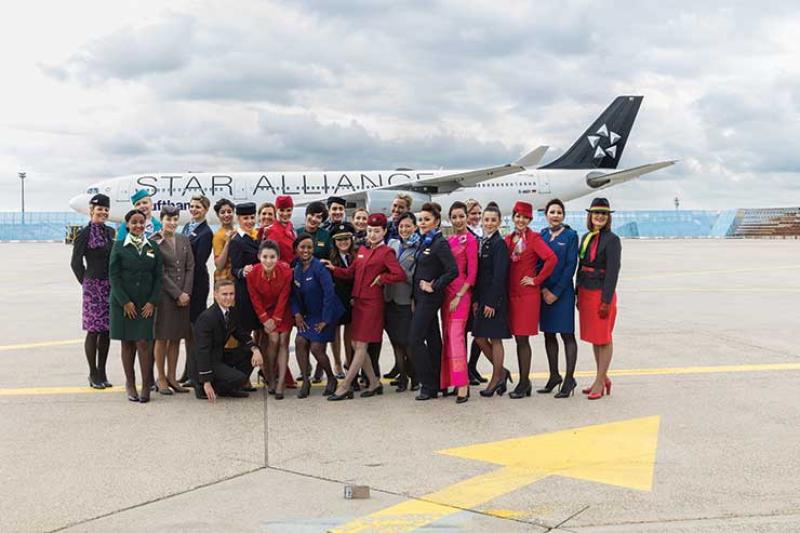
But on May 14 in the same year, five airlines (Air Canada, Lufthansa, SAS, Thai Airways International and United Airlines) launched Star Alliance. Speaking at the 20th anniversary celebrations in Frankfurt in May, the group’s chief executive board chairman and Copa Airlines CEO Pedro Heilbron said there were certain industry critics who thought those involved had lost the plot too.
He adds: “Some experts and sceptics thought this isn’t going to work out; for one it had never been done before and [they said] we know that airlines are very fierce competitors.
“History has proven right the founding airlines as we now have 28 members after 20 years, and are still the largest global alliance. The trend that Star Alliance started is now something that’s pretty much expected by travellers.”
And Heilbron is right. Star Alliance is performing well, with members generating total annual revenue of $173.94 billion from 689.98 million passengers on more than 18,450 daily departures, as of November 2016.
He believes much of the success came from the alliance’s target to be “the leading global alliance for the high-value traveller” and which was built on three initial aims, “network reach, worldwide recognition and seamless service”. He adds: “In those early years the focus was clearly on growing the network and inviting other carriers that would join the alliance and be the ones that would complement the five original members.”
Although the strategy might be evolving today with a focus on improving the customer experience via digital channels, those in the world of aviation route development will be interested to discover that Star CEO Jeffrey Goh does not have the same drive to sign up new member airlines as some of his predecessors did.
He says: “When we were pursuing membership in those early days it was because we needed to build our network. Today I would say it is very good. There are very few areas in the world where none of our members fly but occasionally there are exceptions. The difference between then and now is we have a global, comprehensive and full network.”