Ancient places
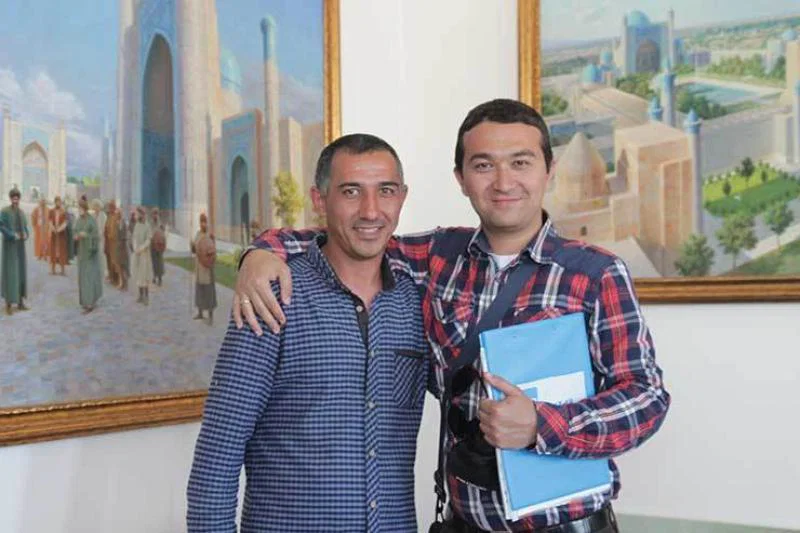
Tour guide Sanjar (right) with artist Azan
I’m on an 10-night escorted tour of Uzbekistan in Central Asia – just a six-hour flight from the UK. The country is land-locked and 42% desert, yet it has two great rivers – Syr Darya and Amu Darya, which feed enormous reservoirs in the cities of Bukhara, Samarkand and capital Tashkent – and lush green parks are unexpectedly prevalent.
Since gaining independence from the Soviet Union in the early 1990s, change is clearly taking hold here. International signage is evident everywhere. The Uzbek car of choice seems to be Chevrolet, probably because there’s a General Motors factory based here. Towers, mosques and mausoleums have been refurbished to a high standard and tourism is doing well with new hotels seemingly springing up at a rate of knots. And Uzbeks today learn English at school instead of Russian.
Though Uzbekistan is a young country where 30% of the population is under the age of 15, it is also an ancient place, perched halfway along the famous Silk Route between China and Venice. The first known people here, the Sogdians, were traders, and since those murky early beginnings, this country has been trading in goods and dreams right up to the present day.
As a consequence of the Silk Route there are still enormous squares in the middle of cities where camels, goods and tents once set up shop. Called Caravanserai, traders were welcome to stay and recover from long journeys here.
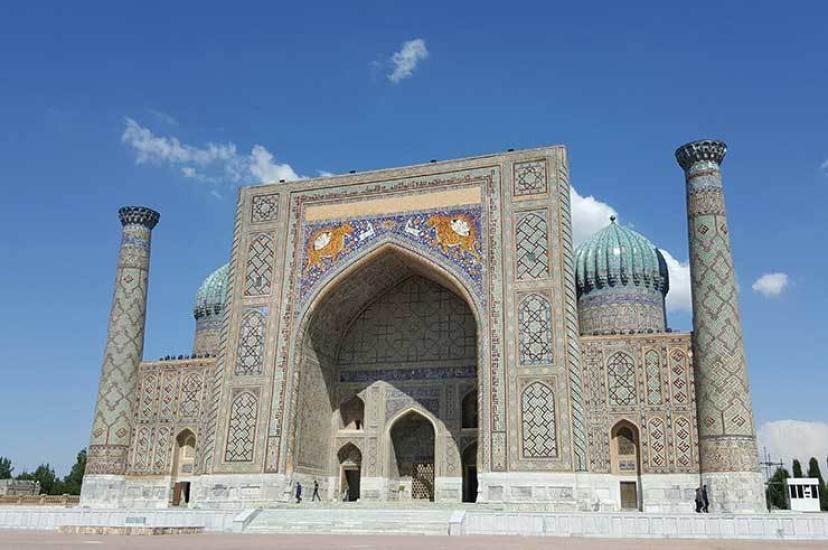
Later came the Arab influence, which meant vast blue and turquoise mosaics would cover the domes, mosques, madrasas (colleges for Islamic instruction) and mausoleums of important rulers and imams. Even the decorative crescent moons are a gift from the Arab world, which introduced Islam around the 8th century AD. The country is still Muslim but moderate.
Up in the air
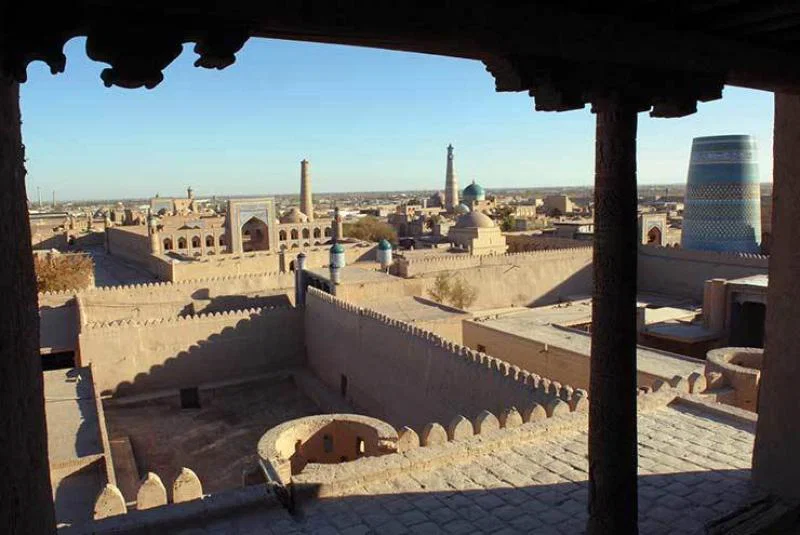
The ancient city of Khiva
The first stop on the tour is the ancient city of Khiva. Perched on the edge of the Kyzylkum Desert, we must take a flight from Tashkent to reach the new capital of the area, Urgent. Little did we know we would be transported in a Russian propeller plane, which turned out to be a wonderful way to see the expanse of desert and steppe below us.
Khiva is still surrounded by the same ancient mud fortifications that were first constructed more than 2,000 years ago. The city gates still exist as they did in ancient times and small mausoleums are perched on the outside of fortification. This was the city of the early Sogdian rulers and then Islamic ones. The madrasas, towers and the palace are still here within this small city and are truly spectacular.
We are sad to leave Khiva as it means enduring a nine-hour coach journey through the Kyzylkum Desert, but the enormous domed markets of Bukhara await.
The addition of China to the Silk Road around the 2nd century BC meant that silk would become a staple of life here. The silk worms, the mulberry leaves they eat and the knowledge of how to weave this precious cloth were all brought from China, mainly in exchange for horses. Though nomadic people still use sheep and camel wool for weaving, silk is softer, more colourful and harder wearing.
Intricate and beautiful silk rugs bedeck the floors of homes, hotels and mosques and are one of the most popular purchases for tourists. Enter the Silk Workshop in Bukhara with a haggler’s mindset and a fair amount of cash if you are in the market for one that has been hand-woven on the premises.
Frozen in time
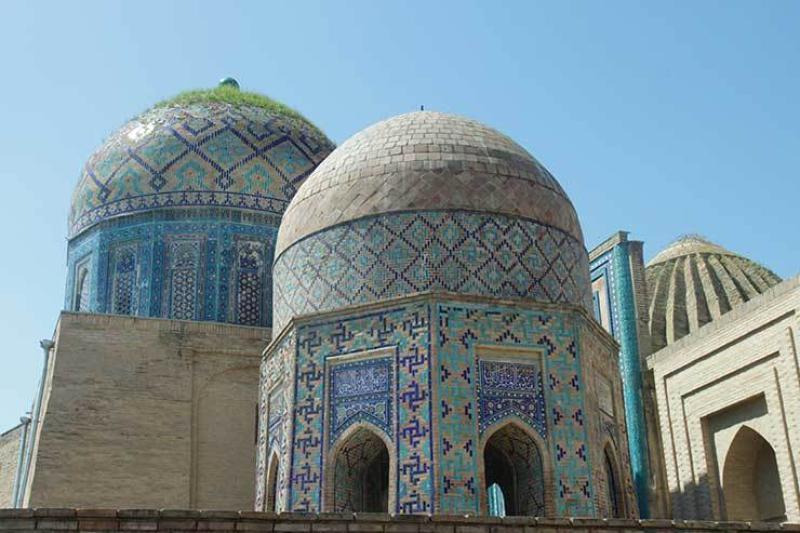
Shahi-Zinda necropolis in Samarkand
But it is Samarkand, with its incredible Shahi-Zinda necropolis and distinctive Registan square, which is my favourite city. The enormous citadel is a shell of its former self but is still awe-inspiring, and you can imagine how magnificent it was in former times.
It was only when the Russians were bombing the city in 1920 that the last ruler Alim Khan fled, along with his harem, to Kabul, Afghanistan. Most of the precious objects inside were destroyed – not by the invading forces but by Khan himself.
A trip out to the countryside is fascinating as mules and carts are still the transport of choice. All along the road farmers have set up stalls to sell rhubarb, cheese and spices. It feels as if time has stood still here.
Possibly my favourite event is the evening we experience “plov” in Bukhara. Traditionally served on a Thursday night, the dish of rice, lamb, sultanas, spices and garlic is slow cooked in a huge outdoor vat and then served with the wonderful round loaves of bread popular everywhere here. Dining in a former manor home with a bit of Uzbek wine thrown in, and being served by the ever-friendly locals, it is an evening to remember on a very memorable trip.
Book it
Saga Holidays’ 10-night Heart of the Silk Route tour leads in from £1,799pp. Price based on a March 7, 2017, departure. Inlcudes accommodation, international and domestic flights, visa, excursions, entrance fees and most meals.
60 seconds with Stuart Douglass-Lee, Saga head of product
What growth have you seen for tours to Uzbekistan?
We launched last year and the interest far exceeded our expectations. In fact, immediately after launch we had to secure additional departures – in particular it struck a chord with single travellers so we added solo traveller dates.
Why have these tours suddenly become more popular?
It’s partly the fascination for destinations that are off the beaten track among the age group we cater for – remember that the over-50s of today were the backpackers of the 1960s and 70s. It also has mid-haul appeal.
Why is an escorted tour a must in this region of the world?
Uzbekistan is a large country so a 10-night tour captures the key highlights of this destination. [And] in a country where hotel infrastructure is limited, the tour ensures that you are going to stay in the best available ones.
What are Uzbekistan’s main attractions?
One of the main attractions is undoubtedly its architecture and the restoration that has taken place. One can never tire of the turquoise tile-work that adorns the mosques, madrasas and other ancient buildings.
What kind of clients might it suit?
If clients have been to China, India, Egypt or Peru then Uzbekistan should most certainly be on their “must visit” list.