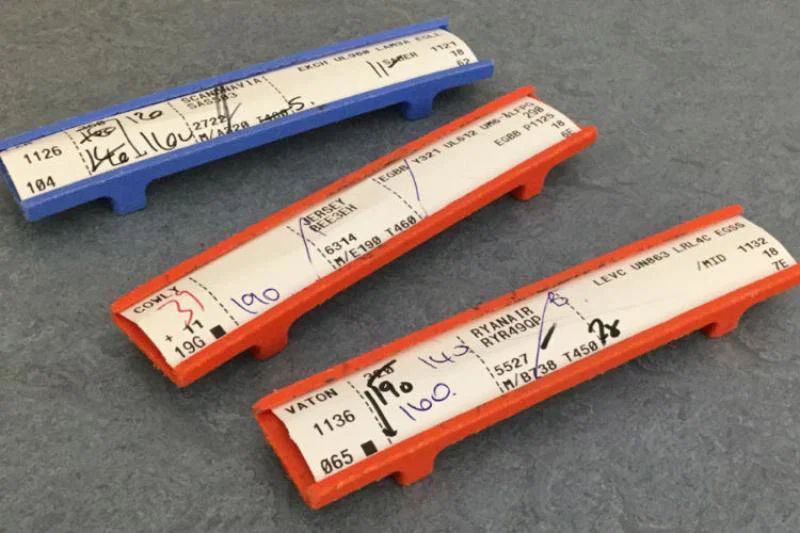







NATS (National Air Traffic Services) is switching from a paper-based flight information to a new, entirely digital setup - EXCDS - designed to meet 21st century demands.
Starting Wednesday (April 4), NATS will phase out the paper strips currently used to record all the information it needs to keep aircraft safely separated.
This includes where a flight is heading, the speed it is travelling and any instructions it has been given, such as at what altitude to fly.
NATS has already completely two out of five planned transitions to EXCDS, affecting arrivals, departures and holding areas north of London, including aircraft heading to and from Heathrow, Luton, Stansted and London City airports.
Based in Swanwick, Hampshire, NATS will now focus its attentions on airspace south and south east of the capital, a region it admits is a “particularly busy area” covering the approach for the UK’s two busiest airports - Heathrow and Gatwick.
“Moving to a digital tool within London Terminal Control is a crucial step in preparing ourselves for future traffic levels and, alongside much-needed modernisation of our airspace, will give the UK the airspace infrastructure it needs for the 21st century,” said Peter Dawson, NATS general manager London Terminal Control in a blog post on Tuesday (April 3).
“We’ve successfully completed two out of five transitions on to EXCDS and are now about to start the third, which will undoubtedly be the most challenging in terms of the possible impact on passengers and the flying public.”