








A luxury travel leader has called for the sector to take immediate action on AI, a phenomenon he believes to be the “fastest technological shift our industry has ever experienced.”
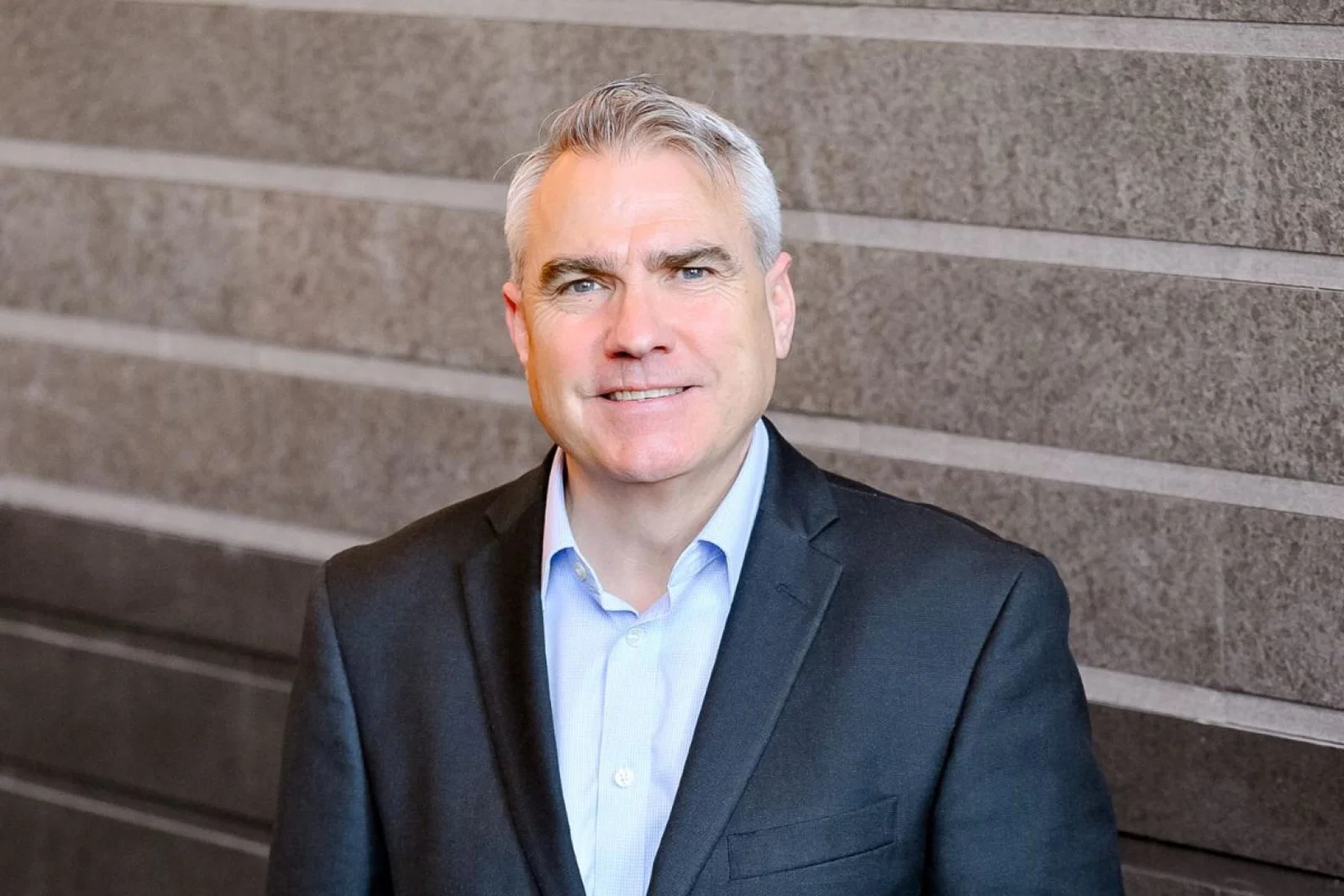
Paul Mulcahy, Chief Commercial Officer at The Lux Collective, says there could be “bad outcomes” if key issues facing current infrastructure are overlooked.
“AI is going to dramatically disrupt our business – positively and maybe less positively – and we need to be ready for that,” the Mauritius-based hotelier told TTG.
Mulcahy is now on the advisory board of AI Hospitality Alliance, an independent platform dedicated to the development of artificial intelligence across the hospitality sector.
He is joined by 36 other representatives from major industry players, including hotel groups like IHG and Wyndham and technology brands such as Microsoft and Oracle. The alliance also has members from Mews, a cloud property management system [PMS] and Cloudbeds, a PMS and hotel operations software.
The reason behind Mulcahy’s participation is simple: to ensure luxury hospitality has “a seat at the table” as the industry defines how AI will shape its future.
“We need to be in control of our destiny,” he said, before noting that this isn’t the first time the industry has been rattled by rapid technological advancements.

Mulcahy has urged the sector not to repeat the mistakes of the early 2000s
“If you go back to the early 2000s, OTAs [online travel agencies] came onto the scene and shaped distribution without really any hotel input. We weren’t ready and we spent the next two decades trying to negotiate our way back – in terms of getting back control of our guests, commission and distribution.”
Mulcahy warns that without a “shared strategy” on AI, the industry could find itself playing catch-up once again.
“We have to have a collective voice,” he said. “Right now, LLMs [large language models] and other AI players are working on context protocols like MCP, which is basically the translation layer that sits on top of hotel systems.”
If travel businesses don’t have input in these developments, they risk their ability to integrate their unique value propositions – such as seat upgrades or loyalty perks.
Another major issue facing the industry is fragmentation, or a lack of “clean communication” between hotel technology systems.
“Right now, the PMS [property management system], CRM [customer relationship management] and CMS [content management system] aren’t speaking cleanly to one another,” Mulcahy explained. “Which means the data is not AI ready. If you were to hook that data up and put it straight out on ChatGPT, it would be a horrible mess.”
Mulcahy hopes that the AI Hospitality Alliance will be able to tackle this current pain point through the establishment of structure. “We need shared standards and vendor evaluation frameworks,” he stressed.
Noise is costly
Without these measures in place, Mulcahy says there could be significant financial costs for the industry.
One risk factor is the “noise” – or over-saturation of AI products – which can prompt travel businesses to chase the “loudest, flashiest thing” without researching its success rates.
“There is a major cost to this noise,” he said. “You can have wasted budgets on pilots that never had clear success metrics, or the guest experience can be impacted by a half-finished deployment that went live too early.”
In the worst case scenario, these setbacks can lead to an “AI fatigue” that discourages people from engaging in the technology altogether. “You might just start to feel it’s all hype after that third ‘revolutionary tool’ still doesn’t deliver.”
Mulcahy is optimistic, however, about The Lux Collective’s relationship with AI.
“For operators of our size, AI will be a great leveller,” he said. The luxury brand, which has 18 resorts across Asia and the Middle East, is currently looking at making its systems as ‘AI native’ – or AI compatible – as possible.
“Rather than a big bang transformation programme, our approach is to let AI capability accrete naturally,” Mulcahy explained. “So as each vendor contract comes up for renewal or reaches end of life, we choose to replace with what solution is most deeply AI native.”
He added that though The Lux Collective is “in talks to do a couple pilots”, it isn’t pledging loyalty to any single AI product.
“The benefit of being smaller is we’re not handcuffed to outdated proprietary IT systems, and we can move fast once a path is proven.”
In the meantime, Mulcahy is prioritising adaptability in every department of the company. “We don't really know where the winners and losers are yet,” he admitted. “So the more flexibility you have, the more you future-proof your business.”