






Travel will be one industry with a lot to resolve in the next two years before we officially quit the European Union. Things that generations have taken for granted – from the right to enter an EU country without visas, to how much alcohol travellers can bring home – will all be part of the Brexit fallout.
Here are some of the key issues that will unfold as talks begin.
The right to roam
UK citizens holidaying in Europe after Brexit could in theory need individual visas to travel for EU countries, but the EU is considering introducing a European Travel Information Authorisation System (ETIAS), similar to the electronic Esta system in the US, which will incur a fee and will need to be renewed every few years.
"Airlines loathe EU261, the generous delay compensation scheme, and have lobbied hard against it in Brussels. The good news for passengers is that these rights will become part of UK law following Brexit"
An Abta spokesperson said the launch of the ETIAS was expected in 2020 or 2021, but added: “It’s not certain to be introduced.” By then, the UK will be a “third party” and talks will have to be held on whether the UK can be an ETIAS member or if it will have to remain outside the system. If so, there is the prospect of UK passport holders joining the usually slower non-EU queue at air and seaports. “We just don’t know,” added the Abta spokesperson. Closer to home, the boundary between Northern Ireland and Ireland is likely to remain a “soft border”.
The right to fly
EU airlines currently enjoy open skies, enabling them to fly between EU countries. In addition, the EU negotiates the right to fly to the US on behalf of the whole union. Brexit will mean the UK quitting the Single Aviation Market, which could lead to it having to negotiate individual deals separately with each country.
"The European Health Insurance Card (Ehic), which allows free or reduced-price medical treatment in EU countries, will need to be renegotiated"
The good news is that we can join the European Common Aviation Area (ECAA) instead, which is what non-EU members Norway and Iceland have done. The bad news is that this will have to be negotiated and the sticking point could well be freedom of movement for EU citizens coming to the UK. Ryanair, as a precaution, is pivoting growth away from the UK and easyJet is preparing to move its legal headquarters to an EU country.
Currency
Hopefully, the worst has already happened. The pound slumped by around 20% against the euro, and to its lowest levels against the dollar since 1985 following the referendum result, and doesn’t look like recovering any time soon. But the shock may have already been built into exchange rates and a Reuters poll of more than 60 banks in March found no predictions of dramatic change once Brexit happens. A lot depends though on whether Theresa May secures a “soft” or “hard” Brexit.
Medical care
The European Health Insurance Card (Ehic), which allows free or reduced-price medical treatment in EU countries, will need to be renegotiated, and with current calls for the NHS to stop giving free treatment to foreign nationals, this could be a sticking point.
Travel agents should in any case ensure clients always have health insurance as the Ehic will provide primary treatment, but not, for example, the air ambulance that clients may need to fly back to the UK afterwards.
Passenger rights
Airlines loathe EU261, the generous delay compensation scheme, and have lobbied hard against it in Brussels. The good news for passengers is that these rights will become part of UK law following Brexit under the Great Repeal Bill, something that transport minister John Hayes confirmed in parliament.
There has however, been no confirmation that the present rates of compensation will be maintained, so expect airlines to try to negotiate these downwards post-Brexit.
Consumer protection
The CAA says that the Atol system as we know it “is the UK’s interpretation of the 1992 European Package Travel Directive (PTD)”.
Atol actually dates back to the 1970s and was a UK government initiative, so changes are highly unlikely, especially given the number of high-profile company collapses the industry has seen since then. An Abta spokesperson said changes to the PTD, due to come into law next year, which will enhance protection by including linked travel arrangements, will still be adopted by the UK.
Tax-free shopping
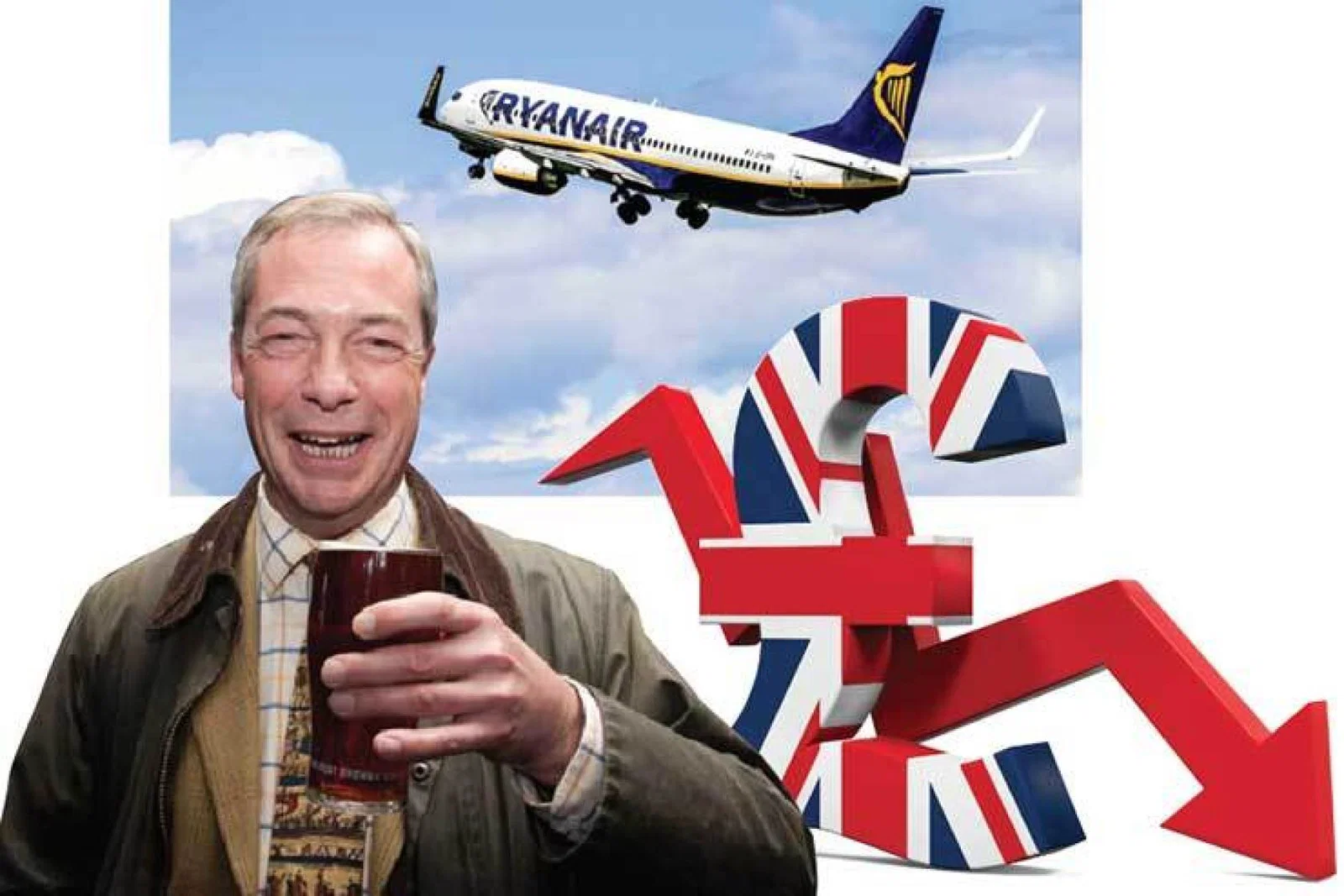
Perhaps there was an ulterior motive in campaigning for Brexit by Ukip’s Nigel Farage (left), a man known to like cigarettes and pints. Currently, goods are only cheaper if travelling outside the EU or in the Canary Islands, although the quantities of goods that can be bought are virtually unlimited within the EU. Post-Brexit, there will be stricter limits on goods such as cigarettes bought in the EU, but they will become tax-free for Brits for the first time since 1999.