



Years of underachievement by England has led to a sense of disappointment instead of triumph at each tournament.
But when co-founders and co-directors of InsideAsia Simon King and Alastair Donnelly first set up InsideJapan, the 2002 tournament, which was to be hosted in Japan and South Korea, was integral to their own aspirations.
King says: “We knew we had the world cup coming up and there was an awareness that this would focus attention on Japan.” Donnelly adds: “We were confident that if England got drawn in Japan we would get business out of it, but we were a bit nervous about it.”
“We were quite confident that Japan could recover because Japan does recover, that’s what it does. It has long history of recovery and is very resilient.”
Alastair Donnelly on the Japan earthquake and tsunami in 2011
The pair got the result they wanted. England were drawn in Japan, and Donnelly and King were forced to move quickly. “We needed something in place straight away even if it was just a concept; within 12 hours we had a product on the website: Follow the Footy,” Donnelly says. “We were found by somebody in an England sports fans forum and they posted it there. We sold our 28 places within four or five days. It was incredible to sell out and that was a great tour.
“We wanted to make sure it contained lots of different things, it wasn’t just flying to Tokyo and attending the games.” This attitude of getting under the skin of the country was core to the conception of InsideJapan as a tour operator.
The pair had both lived and worked in Japan as English teachers after graduating from Oxford and both fell in love with the country. All aboard On returning home in 2000 via Russia, they took a small group tour from Moscow to St Petersburg on the backpacker Beetroot Bus, which gave them the idea of setting up their own operator.
Donnelly says: “When we did the spa stop we were staying in Russian holiday homes that were built under the communists. “I’d never heard of any of this, it was really fun and it didn’t feel like tourism at all; we were doing the same stuff that Russian people did on their holidays.”
“The brilliant thing about the World Cup is the games move around the country. They are never just limited to one city, so it gives all sorts of opportunities for people to explore.”
Simon King
This formed the philosophy behind InsideJapan he says, adding: “We thought if we put together some stuff that we enjoyed doing, then other people would too.” And both were keen to show customers the real Japan with experienced tour guides on hand to help make sense of it all. King says: “It is one of only a few first-world countries in the world that’s not western and has such a different culture.”
Donnelly adds: “As long as you are with someone who understands the culture, people feel quite comfortable. That was part of the concept behind this – to be with a guide who has been there, and can teach you about it and knows everything there is to be enjoyed.”
In the company’s first full year of business in 2001, the pair, who were helped by an initially part-time member of staff in Japan, held five tours and generated £76,000. The following World Cup year, that turnover reached £300,000. As the business grew so too did staff numbers, but the founders were keen to employ staff that had lived in Japan, and would therefore know it best.
King says: “We wanted to get beneath the surface, you can only really get that if you’ve lived in a place and had a real passion for the place.”
Wonder Wall
By 2006 the decision was made to join Aito and while they went to that year’s conference with one reason in mind, it was meeting accountant Jonathan Wall – the managing director of Elman Wall – that proved to be the real game changer.
Donnelly says: “We had this idea we could sell to travel agents. We had no background in the industry so while it might not sound like a genius idea, it hadn’t occurred to us before. It was a new route to market.”
King adds: “After the conference Wall came to visit us; accounting in travel is difficult, especially if you don’t have any background in accountancy and don’t understand the basics of a travel balance sheet.” King explains that while the operator was by then generating a turnover of £2 million, the paperwork largely consisted of spreadsheets and a database that left Wall concerned. “He said ‘you must have a booking system, if you do not have a booking system you do not have a business’.”
The company started using the Axum booking system and business grew further with 2010 seeing a turnover of £5.7 million and “strong” profits. By March 2011, InsideJapan was growing further, with £3.7 million generated since the start of the year. However, on March 11, disaster struck. The country was hit by a massive earthquake and tsunami, killing thousands of people and leaving much of the Japan’s infrastructure, including four nuclear power plants, severely damaged.
Bookings fell off a cliff, Donnelly admits, and while many customers who were due to travel to Japan that year tried to cancel, the majority were persuaded to rebook for the following year with a 5% thank you discount. At the end of 2011, turnover was recorded at £3.2 million.
Donnelly says redundancies were avoided but staff hours were reduced, adding: “It was a four-day working week as we didn’t have any work.” However, at the time both were confident if they could survive the initial impact, InsideJapan would stay solvent thanks to the destination.
Donnelly says: “We were quite confident that Japan could recover because Japan does recover, that’s what it does. It has long history of recovery and is very resilient and we were confident that customers would come back.”
However, he admits it was the motivation they needed to launch programmes in other countries, an idea they had been toying with before the earthquake. InsideVietnam launched in January 2013, prompting the company’s name to change from InsideJapan to InsideAsia, with InsideBurma launching in the autumn of 2014.
Trust factor
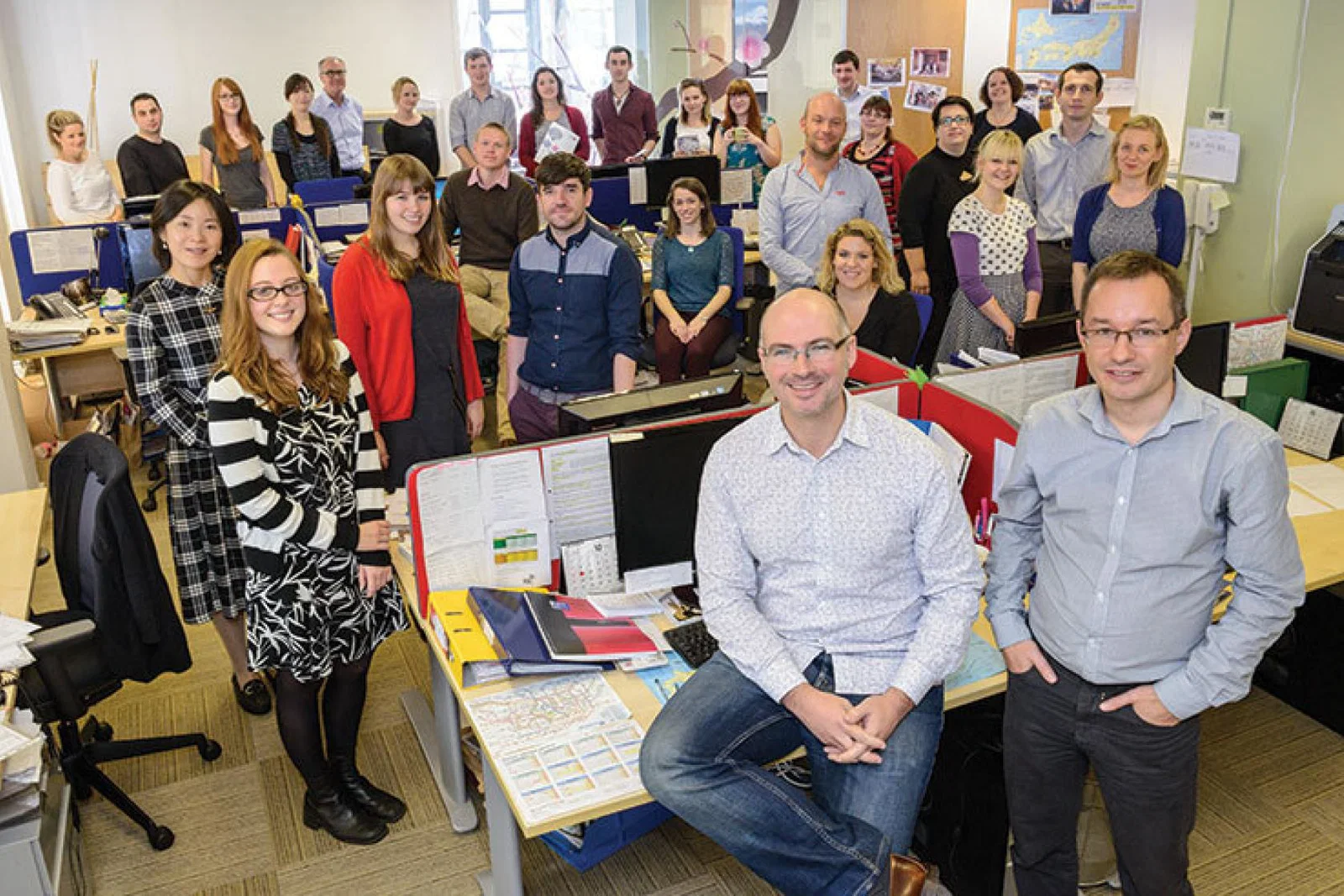
As Japan is once again in vogue as a destination, InsideAsia staff numbers have grown to just over 80. Rival companies are beginning to flood in but both King and Donnelly remain unconcerned by the competition.
Donnelly says: “We are in a far stronger position than other companies. “We’ve got 15 years experience of Japan… which helps build trust with suppliers. Japan is a country built on long-term business relationships and that’s how they like to operate.
It takes time for people to trust you but when they do they remain quite loyal. “The threat is more localised. We’re talking about millions of Chinese who want to visit it and the exchange rate is very favourable.” Now, just as their business was given an original boost by the Fifa World Cup, the pair are confident that another World Cup, albeit a rugby one, will further help.
The Japanese rugby team have been one of the stories of the 2015 World Cup and with the 2019 competition planned for Japan, the pair are already focusing on it. Donnelly says: “The interesting thing about the recent rugby was how people jumped up and down and cheered for Japan all over the country. It didn’t matter where you were, everyone was supporting Japan and it will make people think about going.”
King adds: “The brilliant thing about the World Cup is the games move around the country. They are never just limited to one city, so it gives all sorts of opportunities for people to explore.” Which is probably just as well given England’s recent rugby world cup group stage departure, suggesting they too have been learning from England’s football team.