




Pioneers rarely rest on their laurels.
That certainly applies to the trailblazers of tourism in the Maldives, brothers Mohamed Umar and Ahmed Umar Maniku, who opened the country’s first resort, Kurumba, in 1972.
They went on to create Universal Resorts, a company they transitioned to Versa Hospitality with much investment and fanfare last year. Under this new luxurious umbrella sit two strands: Versa Collection – home to standalone, unique resorts Huvafen Fushi, Baros, Milaidhoo and Kandolhu – and new lifestyle brand Niva Hotels & Resorts, with all of its resorts now carrying the Niva name.
The new era means the ushering in of Niva Velassaru, Niva Kurumba, Niva Kuramathi, Niva Dhigali – all resorts the trade will previously have been very familiar with. And now, in a move that shows how the company wants to expand, this family includes Niva Labriz and soon-to-open Niva Aria, both in the Seychelles.
For this first-time visitor to the Maldives, I was able to see for myself how this venerable family business is evolving in a market that gets more crowded every year.
To get a flavour of the new set-up, I headed to one Versa Collection property – super-luxe boutique Huvafen Fushi in North Male Atoll – and one Niva resort – the larger but still luxurious Niva Velassaru in South Male.
Crucially, both are only a 25-30-minute speedboat ride from Male’s international airport, something that will appeal to holidaymakers stumbling off a long-haul flight and not wanting to bother with seaplanes.
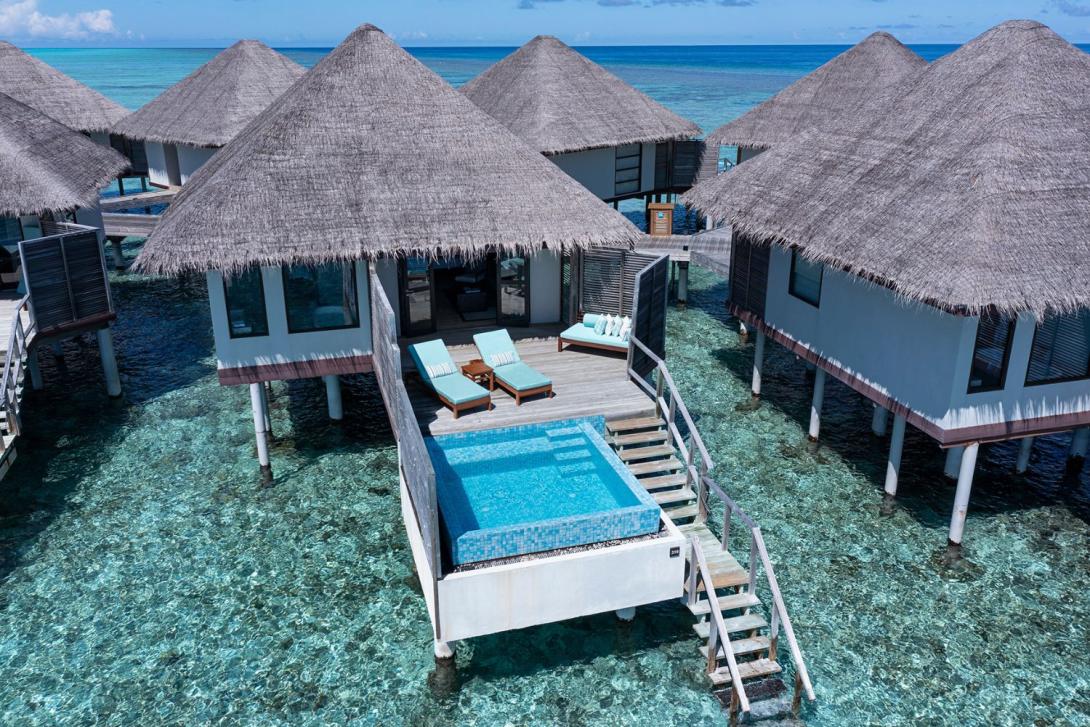
Velassaru Maldives resort is ideal for clients who don't want to travel via seaplane
I soon discover a major change that should delight clients.
“One of the big things about the Versa evolution is that we’ve been able to create a group loyalty programme, which is rolling out now,” says Georgie Westley, Versa’s corporate director of marketing and communications.
“We get a lot of repeat guests. We see them over a life cycle: they bring their kids or they’ve been on honeymoon. Somebody who may have stayed at Kuramathi 10 times might want to, for a special occasion, go to Huvafen Fushi, and this enables them to get those benefits as well.”
Refreshingly cold towels and champagne greet me when I arrive at Huvafen Fushi, which had a major renovation in 2024 and revealed its new lavish three-bedroom pavilion late last year.
In a country where the competition never stops growing and new artificial islands are created every year in a continuous grab for tourism, Huvafen Fushi’s general manager, Noel Cameron, outlines some of the many pluses on the resort’s natural island.
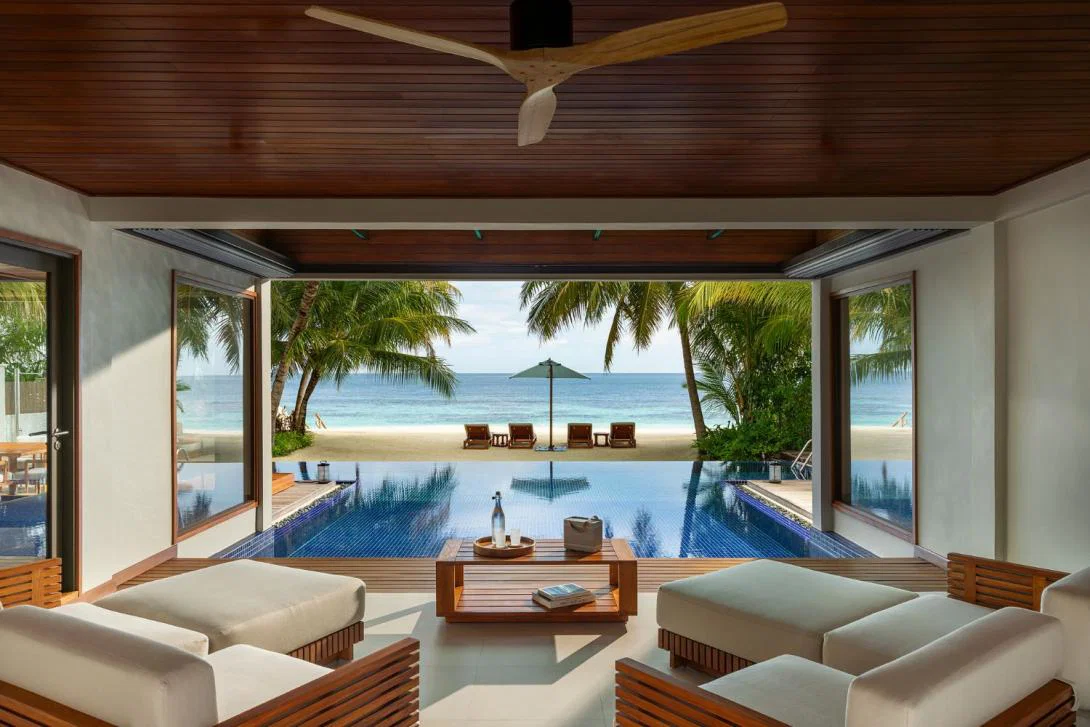
Huvafen Fushi
“We have a beautiful house reef. We’re not under a flight path. We have no local island [nearby]. We’re 30 minutes from Male by speedboat,” he says.
He then lists all the firsts that Huvafen Fushi, which aptly translates as Dream Island, came up with: first to have pools in every accommodation here, first to have an underwater spa, first with an underground wine cellar, first with seven room categories.
First with a thakaru (butler) service – mine, Nihan, turns out to be the fount of all knowledge and knows my schedule better than I do.
Small and intimate, Huvafen Fushi has only 46 bungalows and pavilions sheltering under thick vegetation or strung out along wooden walkways curving around a lagoon. With the resort at about 60% capacity during my visit, it’s not surprising that the conflict in Iran, which had started only four weeks earlier, had been having an impact on bookings.
The UK is the biggest market here, followed by German-speaking holidaymakers, and everyone had been affected by the closure of airline hubs in the Gulf.
A world away
But it’s easy to keep the real world at bay here, where the atmosphere is refined yet utterly relaxed, particularly around the enormous infinity pool and the two main restaurants, Celsius and Fogliani’s.
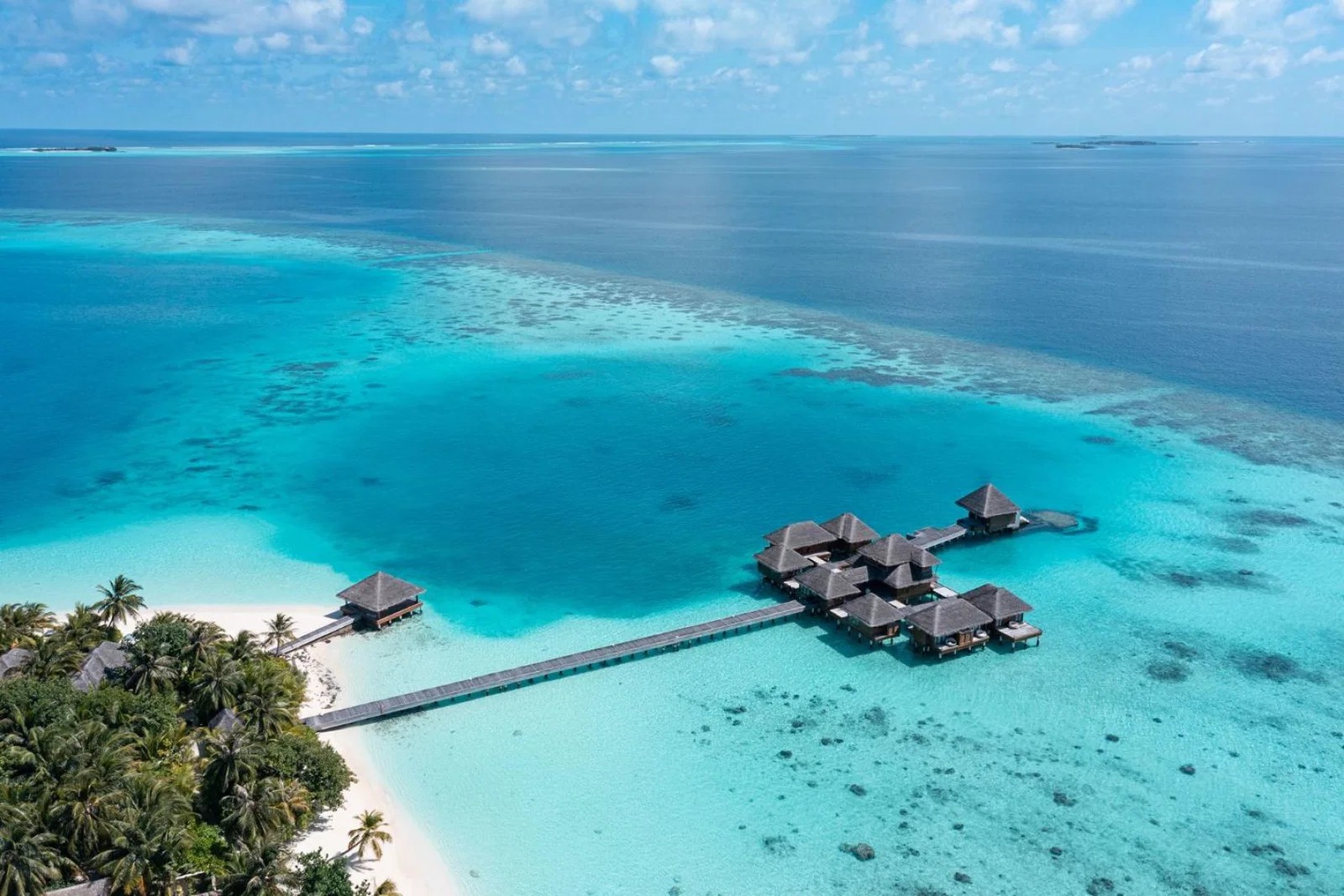
After morning yoga on the overwater pavilion, I stepped from my beach villa straight to the house reef, snorkel at the ready. A massage in the underwater spa proved to be a sublime experience: it’s not every day a relaxation lounge lets you gaze at an extraordinary array of sea life.
Later, after a sunset cocktail at overwater restaurant Raw followed by sushi and grilled giant prawns at next-door Salt, the marine floor show continued, with stingrays and reef sharks zooming in the sea beneath me.
When Nihan booked a turtle safari for me, I was taken to a nearby reef where three sea turtles obligingly swam among the corals, leaving me as breathless as I could be with a snorkel in my mouth.
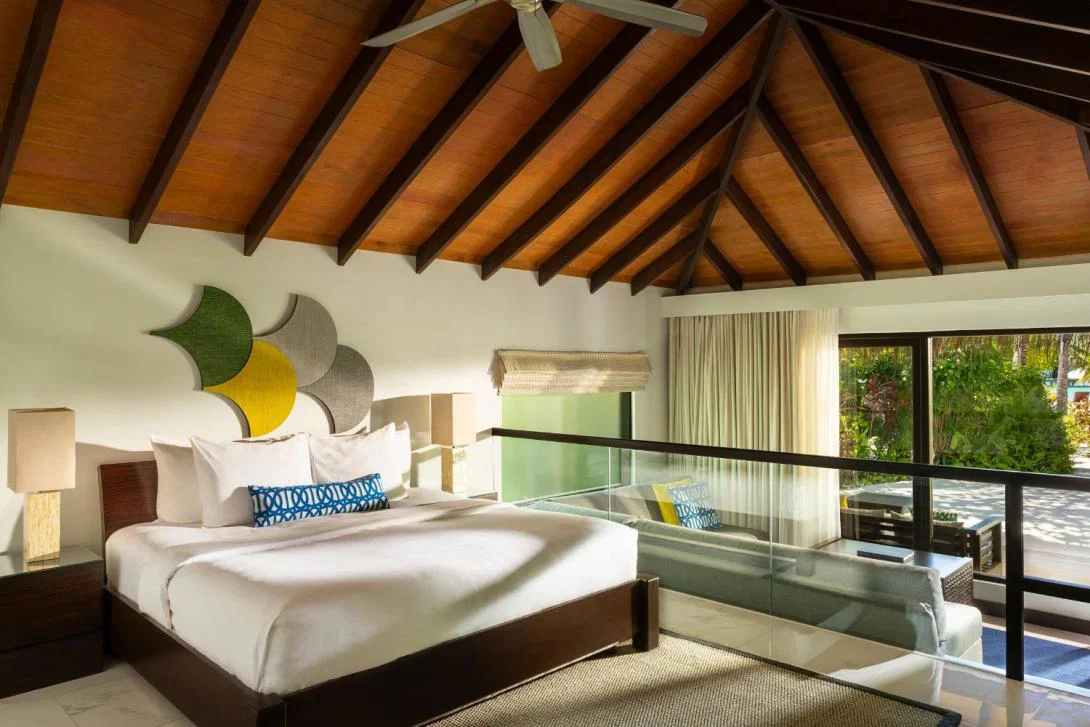
Niva Velassaru
Soon it was time to motor over to Niva Velassaru, which, in contrast to boutique-feel Huvafen Fushi, was more akin to a small village. But even with 129 villas and bungalows, the pace is here just as deliciously laid-back.
The resort generates a pleasantly gentle buzz around its central cluster of restaurants, infinity pool and giant beanbags in a sprawling sandy lounging area where the outdoor cinema takes place. Although Niva Kurumba has a children’s club, there are plenty of families here enjoying the large pool and wide expanse of blindingly white sandy beach.
Many of them seemed as enthralled as I was when we witnessed the chef’s deft teppanyaki skills in Sora’s overwater restaurant, soon followed by the sight of reef sharks and rays swimming in the illuminated waters among cages where coral is being cultivated.
Niva Velassaru’s general manager, Denys Hordiienko, says the rebranding of the Niva properties will bring about 80% of similarities across the resorts, but with the rest of their feel and features unique to each property. They have already rebranded all the resorts’ Niva spas into Lime Wellbeing, which I discovered after a superb massage and a session in the outdoor flotation pool.
“Regardless of the resort, you will get the same level of engaging and intuitive service,” Denys says. “I have regular guests – 10, 15 up to 20 visits on the island. And I have even one who recently had his 52nd visit. If we have so many repeaters, that means we know how to look after our guests.”
One of Niva Velassaru’s biggest draws is the Chill Bar, whose west-facing aspect in front of the house reef brings about spectacular sunsets.
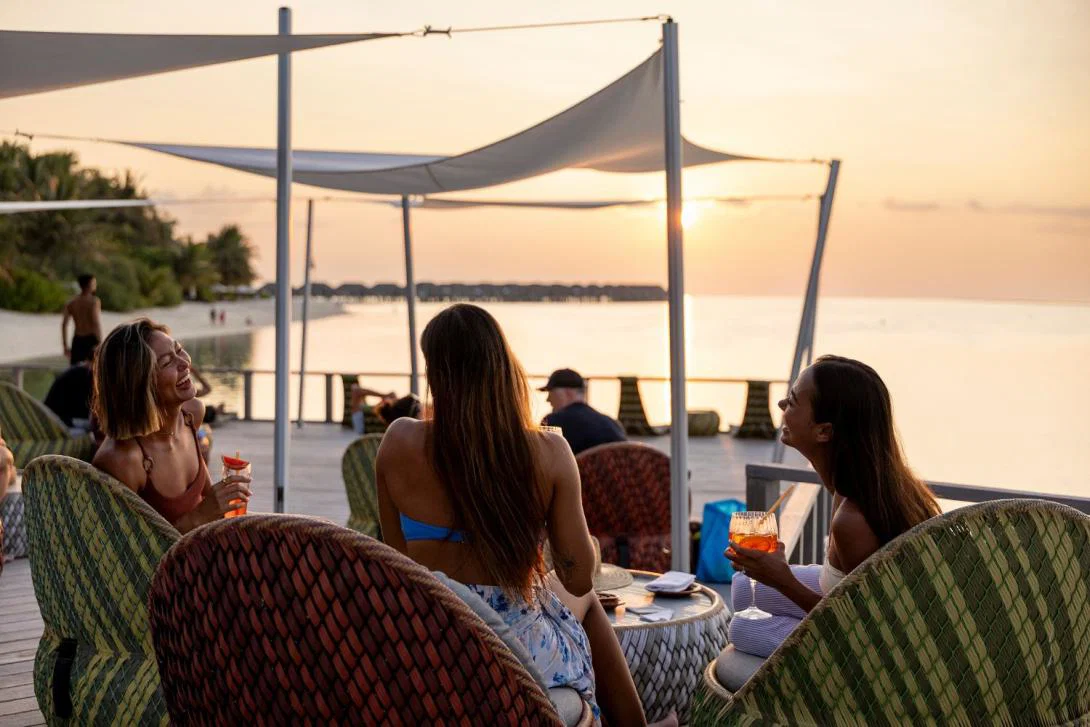
The Chill Bar at Niva Velassaru
After two early evenings spent doing sunset yoga on the beach I finally made my way to the Chill Bar, sitting mesmerised. I’m not all surprised to hear that it’s a very popular setting for vow renewal ceremonies, one of the resort’s most popular requests.
“We’re a family company in the second generation,” Visha Mahir, Chief Executive Officer of Versa Hospitality tells me.
“The first generation is easy. Second generation becomes slightly more challenging. It was quite organic in how the split happened. And that’s why we wanted to have the flexibility to be able to take other properties into the portfolio too. We don’t even want to limit ourselves just to the Indian Ocean in the future.”
After my bliss-inducing introduction to this family saga, I could see why guests return again and again to these resorts – even 52 times.
Find out about homeworking in the TTG Homeworking Hub, packed with advice for existing and would-be homeworkers, and a Matchmaker tool to help you find the right homeworking company for you.