


Feeling the heat? I spent last Thursday (25 June) – the hottest June day on record – dashing across a 36C London. It was truly yucky.
Although perhaps "dashing" was the wrong word with 15-minute waits for delayed tubes as London's infrastructure creaked during the meltdown.
Schools also shut because the buildings simply were not designed for this climate.
Let’s not forget the tragic human cost of the recent heatwave, which saw more than 40 people in France drown while trying to cool off in lakes and rivers.
I'm sure I wasn't alone, then, when I read a BBC report describing how we have to steel ourselves for increasingly hot summers over the next 20 years, which will be even hotter still in the Mediterranean.
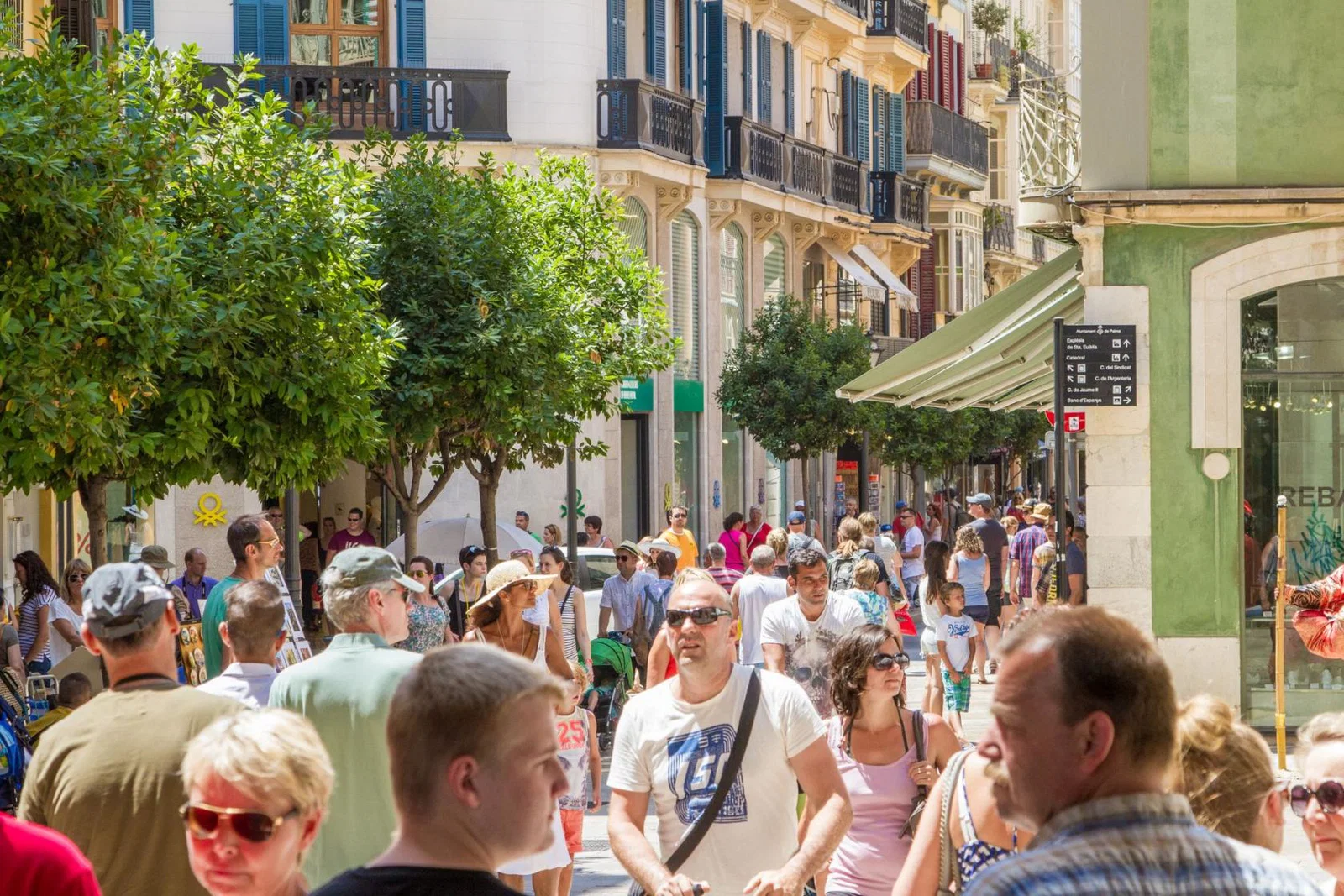
Moreover, for a swathe of popular destinations, unbearable temperatures will be augmented by shortages of water and other resources; spiralling rents and housing costs; traffic jams and acute overcrowding.
A cocktail yes, but not a pleasant one – not for local residents, nor your visiting clients.
So how is tourism promotion adapting to address these new realities? Well, the inconvenient truth seems to be that it's not, really.
'The finger of blame'
When talking to the travel trade, national and regional destination marketing organisations (DMOs) are inclined to dodge difficult questions. Much remuneration is still based on “bums on seats” and “heads on beds” rather than a balanced view of the needs of tourists and the healthy needs of the home population.
Clearly many are fearful any talk of challenges will frighten visitors away or make them feel unwelcome. Ironically, of course, this train has already left the station.
Local populations in places like Majorca – rightly or often wrongly – are pointing the finger of blame at tourists and have started to mobilise.
Another irony is that when speaking privately to smart DMO professionals, they are painfully candid about the negative impacts for them as private citizens. Many. however, clearly struggle to carry this over into the professional narrative. And this is where the analogy with politicians comes in.
When they fail to level with us or treat us like adults and instead tell us what they think we want to hear, in the face of a reality which is often very different, we rightly take them to task.

Richards: 'As industry leaders, we must take back guidance to influence our own clients and teams'
However, isn’t this precisely what the travel trade is collectively doing with its customers? Is a grown-up conversation between destinations and the trade really not possible?
A senior consultancy owner, who handles key promotional activities between destinations and major distributors, told me sustainable destination curation “never came up” in destination promotional briefs.
This does not mean destinations do not have a sustainable tourism strategies, rather that they are not making use of what should be a key ally – the travel trade – to implement them.
Earlier this month, I was privileged to be part of a panel discussing overtourism at the ITT Conference in Malaga on the Costa Del Sol. The province has created a visitor charter called the “Trato Andaluz”, the Andalusian deal.
Faced with the audience of 250 thought leaders from the region’s key inbound market (the UK), the fact this charter did not get a mention felt like a real missed opportunity.
'Trailblazers do exist'
Changing this requires recognition we have capacity to carry two thoughts at once. So, for example, could destinations perhaps say: We want you to visit, but we want you to experience us as we truly are, not as a fantasy. And when you come, please travel in a way that supports our local life, respecting those who live here so they take pride in the place they call home.
After all, a good place to live is a good place to visit. Hence, it logically follows that more nuanced communication has the added value of being authentic.
Trailblazers do exist. When the Telegraph proclaimed “tourism has ruined Dubrovnik,” the city’s expert tourism management and “Respect the City” campaign has seen both record approval from residents while simultaneously growing tourism arrivals by 30%.
Visit Malta now makes use of a highly sophisticated tourism dashboard monitoring 37 different performance measures from seasonality to the environment, social impacts on wages, visitor satisfaction and plurality of reasons to visit.
Both destinations have taken the courageous path and reaped the dividends. So now is the moment for the value chain to come together in face of 45C days.
Whether you are a destination marketeer, a B2B representative or a decision-maker at one of our tour operators, it’s time for a rethink.
As a recent quote said: “The time is over for sustainable tourism strategies; it’s now time for travel strategies that are sustainable.”
Patrick Richards is the director of sustainability consultancy TerraVerde Sustainability.