











“Holidays are the chance for people to relax and switch off – but you can still enjoy yourself while travelling responsibly,” says Aishling McLoughlin, buisiness development director for Iberostar during the latest TTG Sustainable Travel Heroes workshop.
The session – led by Iberostar’s McLoughlin and Intrepid’s senior partnership manager Lucy Wildman – focused on how travellers can minimise their negative impact on the places they visit, from reducing waste to respecting local cultures. Ambassadors in Training were then tasked with creating their own list of responsible travel trips to share with customers.
Here, we cover some of the key takeaways from the workshop so you, too, can help your clients make better holiday decisions.
1. Highlight transport alternatives to reduce carbon emissions
Share with your clients the carbon emissions differences between air, rail, car and coach to their holiday destination – it’s a lot more interesting and easy to work out than you think.
If possible, suggest travel by train – not only highlighting how it will significantly reduce their carbon footprint, but also that it can be a more enjoyable and relaxing journey experience, compared to the stress of flying.
Some suppliers – like Intrepid – take it one step further and provide carbon labelling on many of their tours, completely taking out the guesswork for agents and helping clients make better informed decisions.
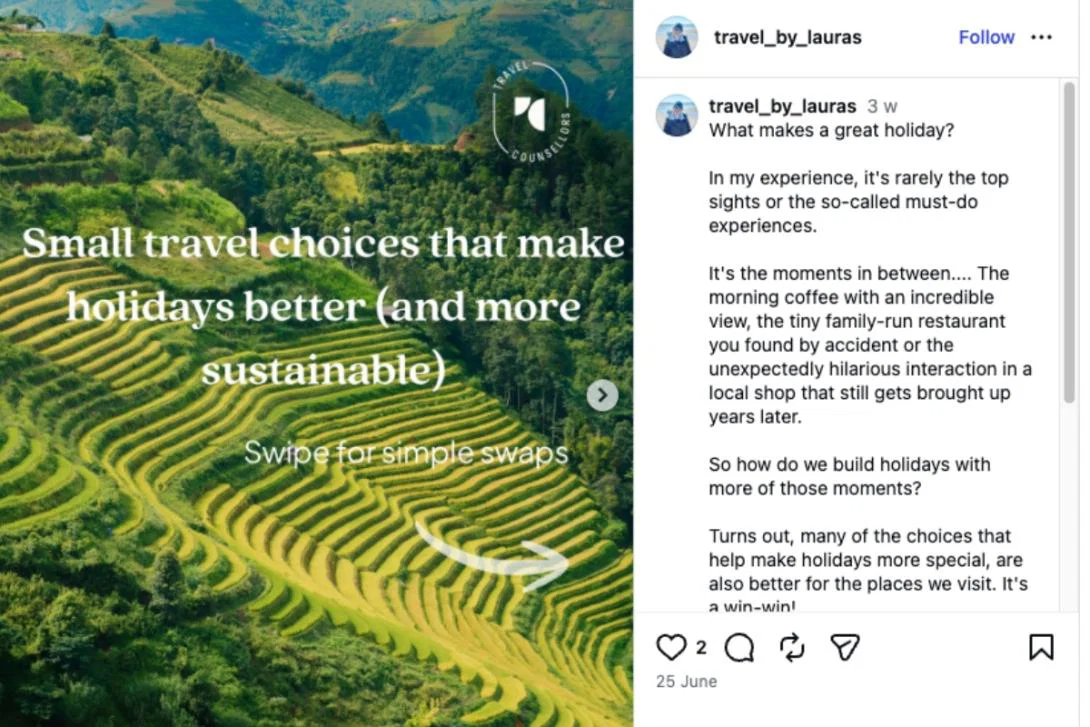
Ambassador in Training Laura Sigsworth posted her tips on an Instagram post
2. Encourage longer, meaningful trips
If you have clients who go away on lots of short-haul trips throughout the year, consider encouraging them to try one longer holiday – with the benefit of this being that they can slow down, relax and really get to know the destination(s) they’re visiting.
“You could potentially put together a multi-trip itinerary which incorporates using rail travel where you can,” says Wildman. “They can really maximise their time away – giving them more meaning for taking to the skies”
3. Offer smarter packing solutions to reduce waste
Travellers often overpack for their holidays, bringing unnecessary items to destinations that may get left behind. A great way to help your clients buy and bring what’s necessary is to create a packing list. Examples of what to pack include: reusable items, such as water bottles, coffee cups, cutlery sets, shopping bags and laundry bags; ocean-safe suncream and eco-friendly toiletries.
Better yet, customers staying at hotels should be advised to utilise hotel-provided amenities (shampoo etc) to reduce luggage and waste. Iberostar is one hotel supplier that puts waste management at the forefront, being single-use plastic free since 2020, and with ‘Reuse Points’ across many of its resorts – where guests can leave behind their holiday kit for other families to make use of, such as pool inflatables, buckets and spades.
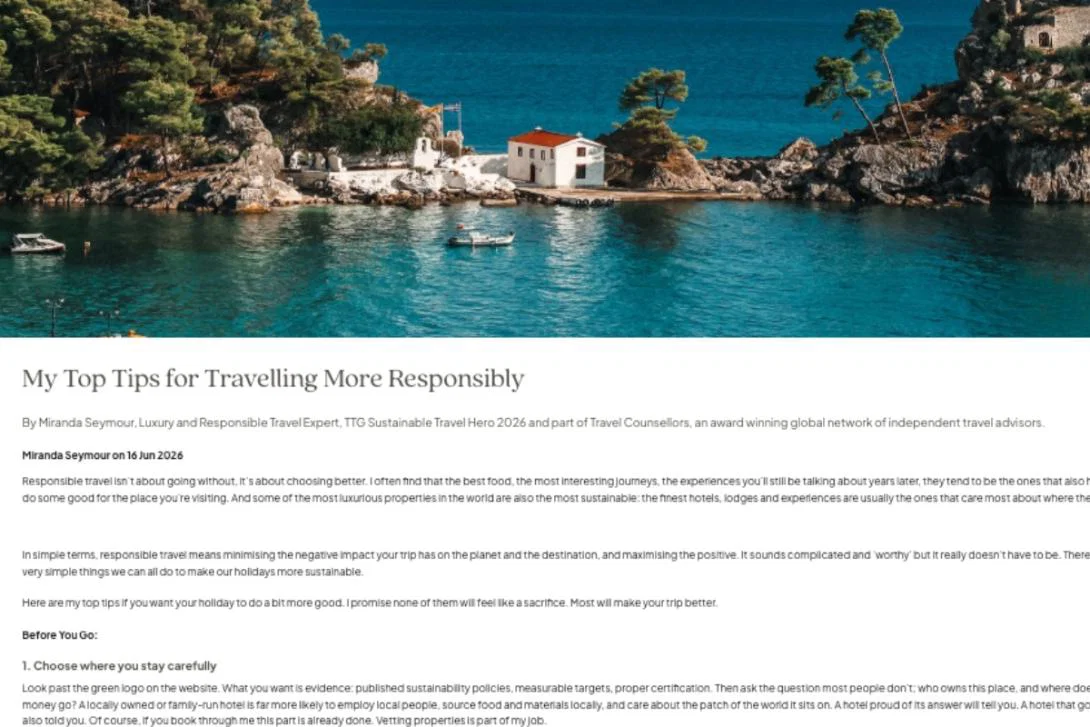
Travel Counsellor Miranda Seymour shared her tips on a blog post
4. Respect local cultures
“For us, a holiday destination is where we travel for one or two weeks of the year – but it’s also somebody’s home, and we should all respect that,” says McLoughlin.
Travellers can be respectful by doing some simple research before their trip – learning a few key words and phrases can go a long way. Also, understanding local traditions and customs – such as learning how to dress respectfully in particular destinations. Not only will local people appreciate efforts, but it can also be a more enriching way to travel.
Travel agents can help clients further by providing links to destination guides, or perhaps even creating their own resources, starting with a guide to the destination(s) they sell most.
5. Guide clients to buy local
To ensure tourism acts as a force for good, agents should steer clients toward independent, community-driven economic opportunities.
Recommend booking tours with local guides who know where to buy authentic crafts, eat at traditional, family-owned venues, or participate in genuine community-based tourism. It ensures your client’s money stays directly within the local economy, instead of fed into multinational corporations.
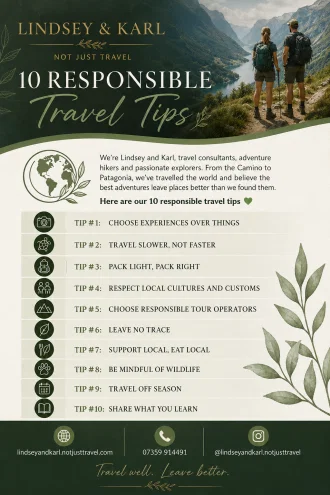
6. Encourage lower-impact gastronomy
Food is one of the most enjoyable parts of any holiday, but your clients can still tuck into delicious meals while being considerate of their meal choices. To help, travel agents can recommend brands that prioritise lower food miles, use sustainably sourced produce and consider mindful consumption.
For example, Iberostar's buffets have cooking stations, serving local, seasonal seafood – of which, 93% is sustainably sourced. It also carefully considers its portions with the help of its pioneering system named WINNOW, used in their kitchens to help chefs measure and reduce their food waste.
Your clients might also consider eating one plant-based meal a day to lower their carbon footprint. Intrepid leans into this on their food-focussed tours, ensuring they include at least one plant-based meal during the trip.
7. Promote certified companies with backed-up evidence
One simple way to encourage responsible travel is to promote those suppliers with stamps of approval. Actively look for verified credentials like B Corp Certification, explicit animal welfare policies, transparent carbon labelling on itineraries and documented science-based decarbonisation targets.
Intrepid is one B Corp tour operator who has its own animal welfare policy in place, meanwhile, Iberostar has an ambitious decarbonisation plan being measured across scopes 1, 2 and 3, aiming for carbon neutrality by 2030.