





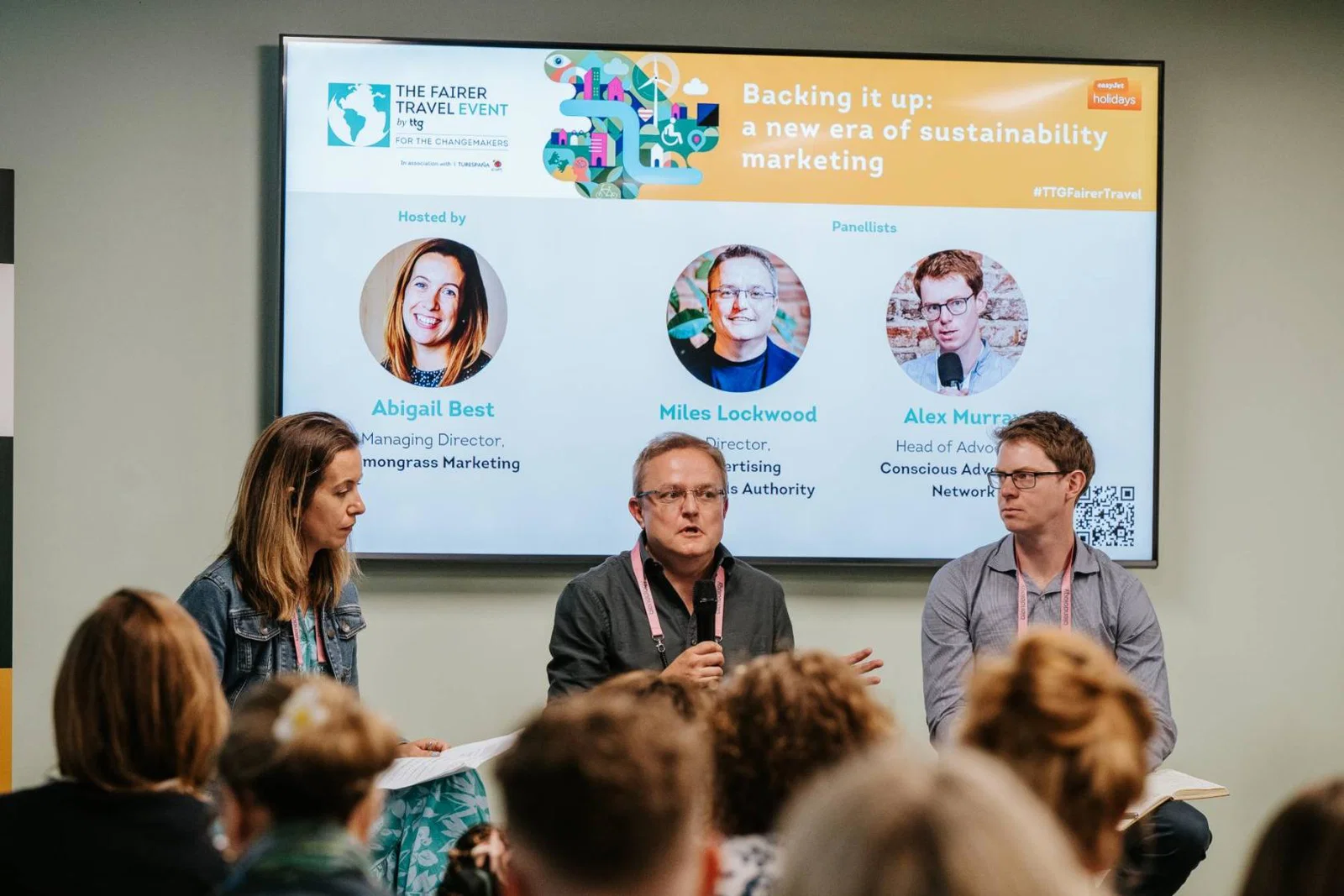
Speaking at TTG's Fairer Travel Event in London, panellists argued the industry's challenge is no longer whether to communicate its sustainability credentials, but how to do so credibly.
"The choice can't just be between misleading your consumer on the one hand and saying nothing on the other," said Miles Lockwood, Director at the Advertising Standards Authority (ASA). "There's more space between those two choices than companies give themselves credit for."
Lockwood said brands had become increasingly nervous about talking publicly about sustainability amid fears of being accused of greenwashing, but warned against retreating into so-called "greenhushing" – a point also raised by Intrepid Travel's Chief Marketing Officer Hazel McGuire in a separate session.
Instead, he urged travel businesses to build claims around evidence rather than marketing ambition. "Say what you can prove; be ready to prove what you say," he said.
'I'd ban phrases like eco-friendly'
He also took aim at broad environmental terminology, arguing words and phrases such as "eco-friendly" and "sustainable" create particularly high evidential hurdles. "If I had my way, I'd ban the word 'eco-friendly'," he said. "You're welcome to use it, but if you use it, we're going to hold you to a very high standard."
Lockwood encouraged marketers to favour more precise, conditional language, citing claims such as "reducing emissions compared with air travel" as stronger examples because they provide consumers with clear context.
Alex Murray, Head of Advocacy at the Conscious Advertising Network, said transparency was becoming a commercial advantage as well as an ethical one, warning brands risk undermining years of consumer trust by making sustainability claims they cannot substantiate. "Trust takes a long time to build but can be lost very, very quickly," he said.
He added consumers increasingly expect brands to demonstrate meaningful progress rather than simply talk about sustainability, arguing businesses should be confident about communicating genuine improvements – provided they can back them up.
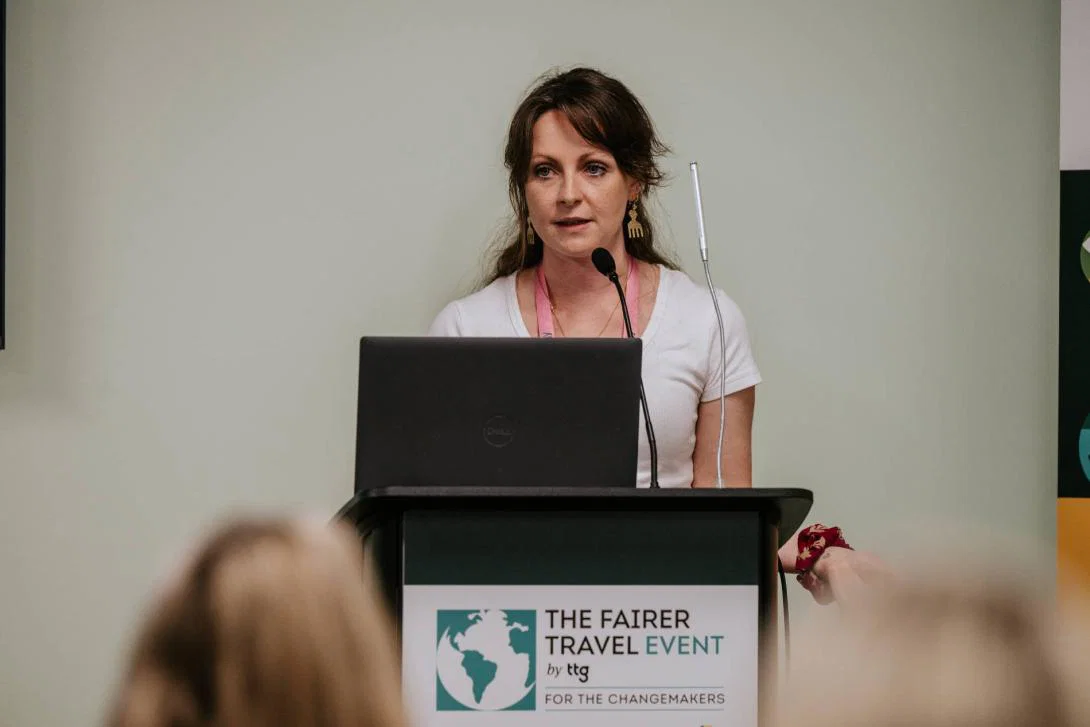
Luxury operator Scott Dunn has introduced supplier pledges and an international reporting system as part of its animal welfare policy, explains Charlie Darlington (pictured)
Scott Dunn's Sustainability and Nature Positive Tourism Lead, Charlie Darlington, offered a case study in how to convert a company's principles into tangible change. The luxury operator introduced a comprehensive animal welfare policy last year after identifying wildlife experiences as a key "risk area" within its supply chain.
Rather than relying on blanket bans, the company has created decision-making tools for staff, introduced supplier pledges, established an internal reporting system and reviews suppliers against recognised animal welfare frameworks.
Darlington said the aim was to improve standards rather than simply cut ties wherever issues emerged. "We're really keen that we support change rather than just flat out walk away from working with a provider," she said. "Most places know there is work to be done and change needs to happen. It's not going to happen if we don't support them."
Scott Dunn has, however, ended relationships with suppliers that failed to meet its standards, while continuing discussions with those working towards improvement.
'If you can touch it, something's gone wrong'
The operator is also shifting towards promoting observation-only wildlife experiences, moving away from attractions involving feeding, bathing or handling captive animals. "If you can touch it, feel it or bathe it, there's probably something wrong," Darlington said.
She pointed to ChangChill in Thailand and Four Paws Vietnam as examples of wildlife experiences that prioritise animal welfare without sacrificing the visitor experience.
Fairer Travel Event 2026
- Comedian Rosie Jones calls on travel industry to ditch one-size-fits-all approach to accessibility
- Travel at risk of overwhelming customers with its climate messaging, industry warned
- Travel industry told to move beyond 'crude' tourism metrics as calls grow for common ESG standards
- 'Ditch CVs and pre-share interview questions': How to avoid inclusion becoming a 'boardroom buzzword'
- Travel urged to 'stop selling sustainable holidays' and 'make sustainability the default instead'
- Travel brands warned to ditch 'eco-friendly' labels they can't prove, says advertising authority
Turning actions into words: read the full report from the 2026 Fairer Travel Event
Looking ahead, Darlington warned artificial intelligence-generated wildlife imagery could become the next ethical challenge for travel marketers, arguing fake animal selfies risk creating unrealistic expectations around human interaction with wildlife and fuel demand for close-contact experiences.
"I think collectively we need to have our finger on the pulse with this," she said. "Please don't post selfies that are AI-generated – or just selfies with the animals full stop."
She urged travel businesses to apply the same scrutiny to imagery as they do to sustainability claims and wildlife experiences, while also warning against taking labels such as "sanctuary", "rescue centre" or "refuge" at face value without checking the evidence behind them.